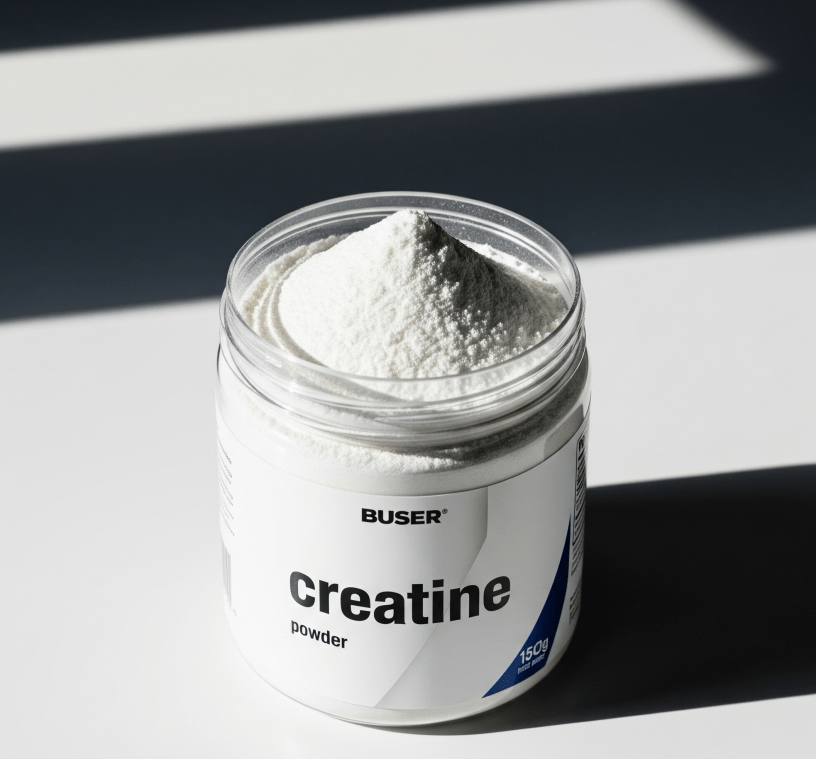
It seems like everywhere I look influencers are promoting creatine as a cure all. One claim caught my attention, that creatine improves memory, so I decided to track down a meta-analysis focusing on peer reviewed research (Prokopidis et al., 2023) to see if there is any weight to this claim. Does creatine actually juice up your grey matter? The brain, believe it or not, is a metabolic hog, demanding serious energy for things like firing off neurotransmitters and keeping synapses humming. And guess what? Creatine plays a starring role in the brain’s energy production system.
The Premise: Brain Energy and Creatine
Your brain needs high levels of energy for cellular processes, including neurotransmitter exocytosis and synaptic functioning. Creatine, which you get from food (mostly red meat and seafood) or your body makes in the liver, kidneys, and brain, is crucial for energy production. It helps convert ADP to ATP (the energy currency) faster than other processes. Supplementing with creatine can increase creatine stores in the brain and improve the ratio of phosphocreatine to ATP. It might even help protect against reactive oxygen species. Given that memory is an energetically demanding process dependent on healthy mitochondria, boosting brain energy with creatine could potentially enhance memory. Animal studies have shown creatine can increase phosphocreatine and ATP levels, stimulate mitochondrial activity, and even enhance spatial memory formation and upregulate proteins linked to memory consolidation. Creatine deficiency syndromes in humans, characterized by cognitive issues, further hint at its importance.
But the human studies? Well, they’ve been a mixed bag, with some showing benefits on cognitive function and memory, while others found squat. This inconsistency could be chalked up to differences in dosage, duration, participant age, sex, location, or just small sample sizes. So, a systematic review and meta-analysis was needed to try and make sense of it all.
The Study: What the Numbers Say
A bunch of researchers (Prokopidis et al., 2023) decided to pull together randomized controlled trials (RCTs) to see if creatine supplementation impacts memory performance in healthy humans. They scoured the databases up to September 2021 and found ten RCTs that met their criteria for a systematic review, with eight of those having the data necessary for a meta-analysis. These studies involved a total of 225 participants (which is a relatively small combined sample size for a meta-analysis, in my opinion). They looked at various measures of memory performance.
The headline? Overall, creatine supplementation did improve measures of memory performance compared to placebo. The standard mean difference was 0.29, which sounds modest, but was statistically significant. However, they noted a moderate degree of heterogeneity across the included studies, meaning the results weren’t perfectly consistent.
Age Matters: The Key Finding
Now, here’s where the picture gets clearer, and frankly, more interesting. The meta-analysis did a deep dive into subgroups. And the most significant finding? The benefits of creatine on memory were way more robust in older adults, specifically those aged 66 to 76 years. For this older group, the effect size was a substantial 0.88.
Meanwhile, in their younger counterparts, aged 11 to 31 years, there was no significant improvement in memory observed with creatine supplementation. This differential effect is potentially clinically significant. Why the difference? It might have something to do with brain creatine content potentially declining with age. Folks with lower baseline creatine levels might see a greater response to supplementation, similar to what’s seen in muscle.
What Didn’t Seem to Matter
The subgroup analyses also checked other potential factors. Here’s the deal on those:
Dose: Whether participants took a low dose (5 g/d or less) or a high dose (more than 5 g/d) didn’t seem to make a significant difference in the overall effect on memory measures. The results suggest higher doses might not be needed to optimize brain creatine content or energy synthesis.
Duration: The length of time supplementing, whether short-term (2 weeks or less) or long-term (more than 2 weeks), also didn’t show significant differences in the subgroup analysis. The authors suggest maybe much longer trials are needed to see timed effects.
Sex: Analyzing subgroups by sex (males only, females only, or mixed) didn’t reveal significant effects on memory measures either.
Sensitivity analyses did suggest that creatine in powder form showed benefits, while encapsulated form did not. Also, benefits were seen under non-stressed conditions, but not stressed ones (like hypoxia or sleep deprivation). And studies with lower participant dropout rates (below 15%) found benefits, while those with higher rates didn’t.
The Caveats: Don’t Bet the Farm Yet
Before you start stocking up, hold your horses. The findings, while promising, especially for older adults, need to be interpreted with caution. Why?
Study Quality: The included studies generally had a moderate risk of bias, often due to a lack of detail on randomization or participant dropouts.
Heterogeneity: There was significant variation between studies, partly because they used a wide variety of assessment tools to measure memory. Combining different types of memory tests (short-term, long-term, working memory) also increased heterogeneity.
Baseline Levels: Crucially, most studies didn’t measure participants’ baseline creatine levels in serum or brain. So, we don’t know if people who responded better simply had lower levels to start with. It’s unclear if differences in effects are linked to baseline creatine or how individuals metabolize it.
Dietary Intake: Dietary creatine intake wasn’t consistently assessed, which could be a factor, especially considering vegetarians tend to have lower muscle creatine and may respond differently.
Publication Bias: The relatively small number of studies in the meta-analysis meant they couldn’t properly assess for publication bias, which could skew the results.
The Takeaway: Promising, Especially for Some
So, here’s the bottom line from this meta-analysis: Creatine supplementation does appear to offer a benefit for memory performance in healthy individuals. But it’s not a universal panacea; the effect seems strongest and most significant for older adults. For younger folks, based on this data, the effect wasn’t there.
The mechanisms likely involve creatine boosting the brain’s energy systems. However, the field is messy, with different studies using different tests and facing methodological limitations. The authors call for more rigorous, large-scale, long-term trials using standardized memory assessment tools to really nail down the effects and understand who benefits most. For now, the data leans positive, particularly if you’re getting on in years, but it’s far from a guaranteed cognitive superpower upgrade.
Reference/Source:
Prokopidis, K., Giannos, P., Triantafyllidis, K. K., Kechagias, K. S., Forbes, S. C., & Candow, D. G. (2023). Effects of creatine supplementation on memory in healthy individuals: a systematic review and meta-analysis of randomized controlled trials. Nutrition Reviews, 81(4), 416-427.
Discover more from Prefrontal
Subscribe to get the latest posts sent to your email.
 Prefrontal