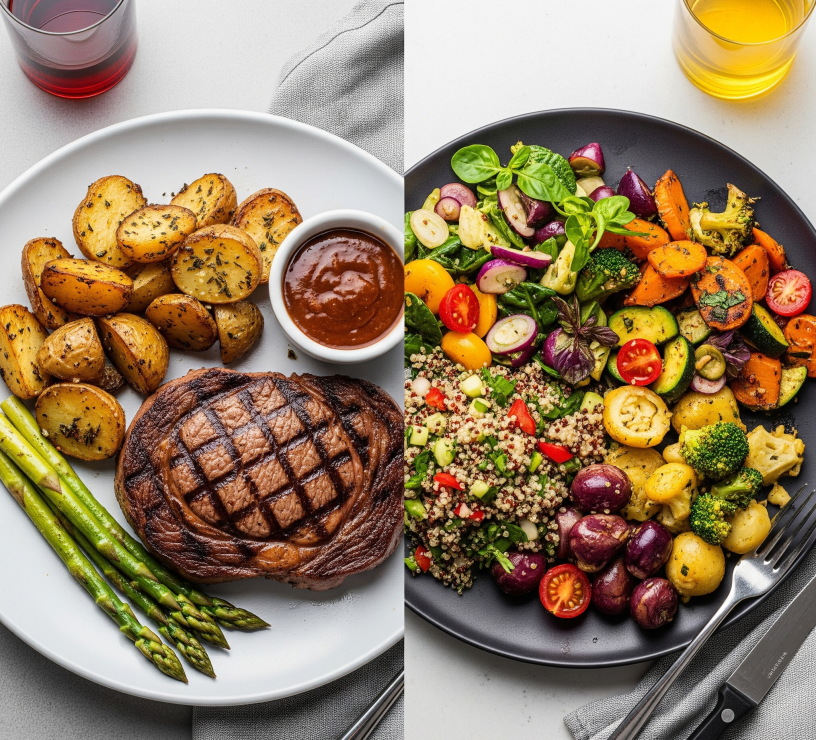
We all know sleep and what we shove down our gullets are fundamental parts of staying alive and functioning. They aren’t just biological necessities; they come wrapped up in all sorts of social, behavioral, educational, and cultural layers. Sleep, or the lack of it, can seriously mess with our eating habits, metabolism, and hormones, potentially contributing to chronic issues like obesity. Popular wisdom and some studies suggest certain foods, like cherries or kiwis (hello, tryptophan and Vitamin B!), might help you catch Z’s by boosting melatonin. On the flip side, caffeine is the universally acknowledged enemy of sleep, known to delay sleep onset and mess with sleep quality. The precise mechanics of how food intake affects sleep aren’t fully mapped out yet, but factors like food type, calorie count, and timing all seem to play a role.
The Experiment: Meat vs. Veggie Bedtime Bites
So, does that hefty dinner before bed really ruin your night? There’s a widely held belief, almost a “truism,” that a meat-heavy, high-carb, high-fat, high-calorie dinner late in the evening is a bad idea for sleep. But the science? It’s been a bit inconsistent. A study by Amit et al. (2021) decided to put it to the test. They rounded up 20 healthy young adults, equal split of men and women, all with good sleep habits. These folks spent two non-consecutive nights in a sleep lab. On one night, about two hours before their usual bedtime, they ate a vegetarian dinner: a salad with lentils, vegetables, cheese, and bread, totaling 457 calories. On the other night, same timing, same participants (but in a randomized order), they got a meat dinner: a hamburger and extra-large fries, clocking in at a much heftier 926 calories. Both meals were served with only water to drink. Sleep was monitored scientifically using polysomnography, and the next morning, participants were assessed for sleepiness, mood, and attention using standard questionnaires and tests.
The Results: A Surprising Draw
Here’s where it gets interesting, and maybe busts some myths. Despite the significant difference in calories, carbohydrates, and fat between the two meals, the study found no significant differences in various sleep measurements, including how long it took to fall asleep, total sleep time, wake time after falling asleep, sleep efficiency, or the percentage of time spent in different sleep stages like light sleep, deep sleep (SWS), or REM sleep. The type of dinner also didn’t change participants’ subjective sleepiness levels the next morning, as measured by the Karolinska Sleepiness Scale (KSS). Their mood, assessed by the Brief Symptom Inventory (BSI), also remained unaffected by the dinner type. Even their ability to pay attention and concentrate, measured by the CPT-III test, showed no significant differences between the mornings after the meat versus vegetarian dinners.
The Takeaway: Maybe That Burger Isn’t So Bad After All?
Contrary to what many people believe, this study’s findings suggest that eating a meat dinner might not impact the quality of your sleep or your ability to function the next day (like your mood, sleepiness, or attention) any differently than eating a vegetarian dinner. The authors point out their results align with some other recent work that questions the idea that high-calorie, high-fat, high-carb meat dinners necessarily mess up sleep more than lighter vegetarian options. They speculate that discrepancies with studies showing negative effects might be due to differences in methodology, particularly their use of controlled food intake and the “gold standard” of in-lab polysomnography for sleep assessment, compared to self-report diaries or actigraphy used in other research.
However, it’s not a free pass to eat anything you want before bed every night. The study had limitations: it involved a small group of young, healthy individuals, and the results might differ for other populations, like older people or those with health issues. Plus, they only controlled the dinner meal, not what participants ate during the day. But for young, healthy adults based on this research, perhaps that late-night burger isn’t the sleep destroyer it’s often made out to be. More research is definitely needed to fully understand the complex interplay between diet and sleep.
Sources:
Amit, G., Simona, S., Nohar, S., Niv, M., & Yaron, D. (2021). The effect of nocturnal “meat” versus “vegetarian” dinners on sleep quality and daily functioning. Sleep and Breathing, 25, 471-477.
Discover more from Prefrontal
Subscribe to get the latest posts sent to your email.
 Prefrontal