
We like to think we’re these unique, independent agents, little unique rockets blasting off into the world, eyes fixed on the prize. Especially in the West, right? Our culture practically hammers it into us from birth: Be you. Be different. Stand out. It’s the narrative of the rugged individualist, the lone wolf, the person with “fixed attributes” who can just hop from one context to the next without changing much. We value freedom, uniqueness, and describing ourselves based on our personality traits and attitudes.
But that, my friends, is just one operating system. It turns out, how you see the world – what you pay attention to, how you figure out what caused something, even how you group things together – isn’t universal. It’s partially wired by the culture you grew up in. And the starkest comparison is between Westerners and East Asians.
Object, Context, and the Self
Think of it this way: Westerners, generally speaking, adopt the analytic approach. We zoom in. We fixate on the salient object in the foreground. We pick it apart, analyze its attributes, try to fit it into a category, and then figure out the rules that govern its behavior. When something happens, we tend to blame or credit the object or the person themselves – causality is seen as internal. It’s all about that singular, focused entity and our goals related to it.
East Asians? Different story. They’re rocking a holistic operating system. Instead of zooming in on the object, they see the whole field, the entire context, the relationships among things. They notice changes and connections. When something goes down, they’re looking at the field, the context, the external factors. They group things not just by category, but by how they relate to each other, by family resemblance.
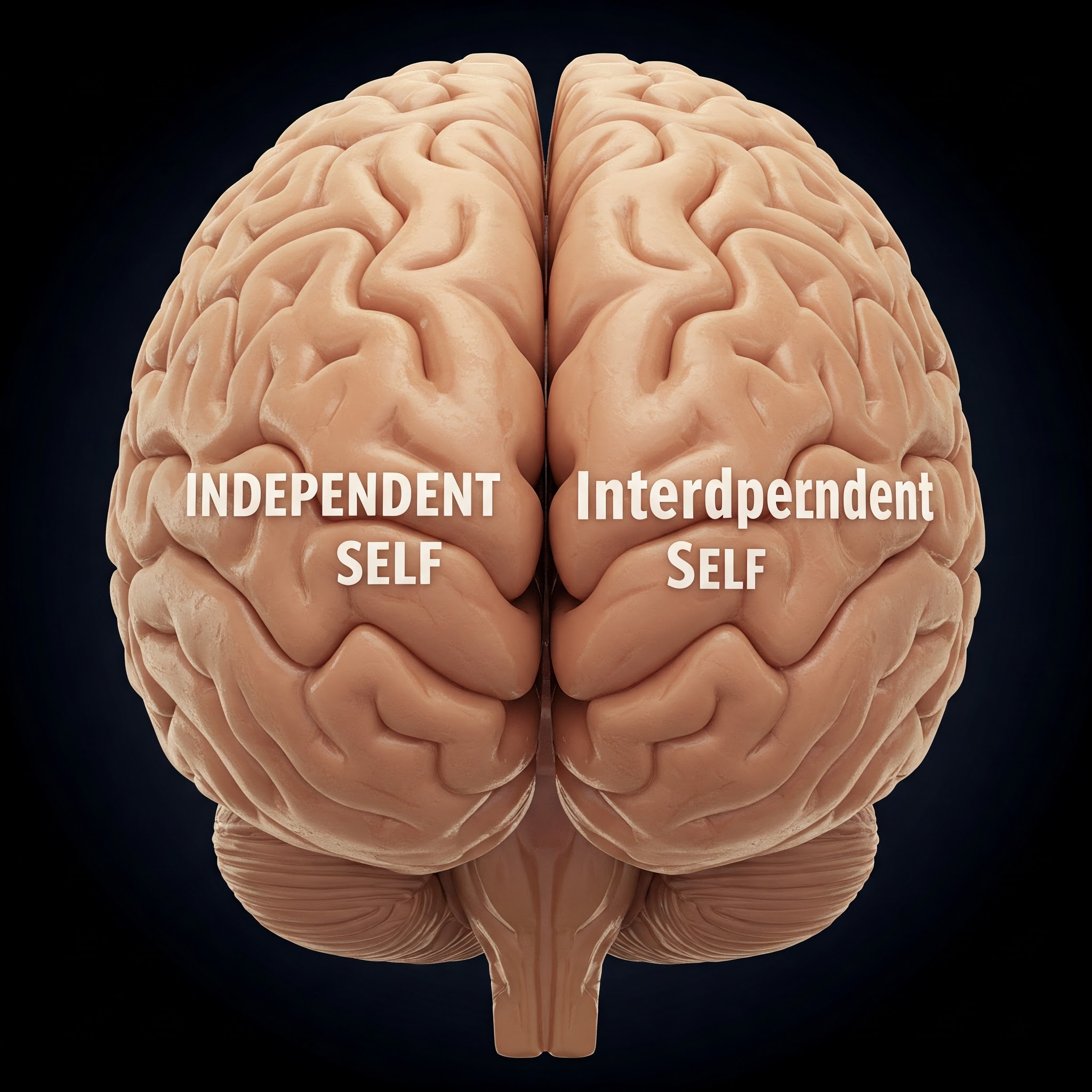
Where does this come from? Part of it is social structure. East Asian societies are often highly interdependent. You have to pay attention to relationships, to the social network, before you charge ahead with your own stuff. Your sense of self isn’t this isolated unit; it’s tied up in the context, in your relationships. Western societies, being more independent, give you the ‘luxury’ of focusing on the object and your personal goals. You can describe yourself without mentioning anyone else.
The environment plays a role too, believe it or not. Studies show that Asian-built environments are literally more complex, packed with more objects, which might just train your brain to pay attention to the whole scene, not just one thing. Western environments are simpler, emptier, letting that object focus reign supreme. Even the art reflects this – Western art (traditionally) puts the object or person front and center, while Eastern art (traditionally) gives more weight to the background and setting.
This isn’t just about what you see in a photo. It bleeds into memory, reasoning, even how you handle contradictions. Westerners might favor formal logic; East Asians might be more comfortable finding a “middle way” between seemingly opposing ideas. Westerners see stability; East Asians are more attuned to change and might even predict reversals in trends.
The Bottom Line for Business
If your team members, partners, or customers are running on different operating systems – one analytic, object-focused, individualistic; the other holistic, context-focused, interdependent – there might be a mismatch or even friction.
Communication: A Western manager might give direct feedback focused on an individual’s performance (the object). An East Asian team member, seeing themselves as embedded in the group, might hear that as an attack on the whole team or feel profound shame that disrupts group harmony, something they’re constantly attending to. Conversely, a Westerner might miss the subtle cues and context that an East Asian colleague relies on to convey meaning.
Negotiation: One side focuses relentlessly on the deal points, the terms, the quantifiable attributes of the agreement (the object). The other side might be prioritizing the relationship, the long-term context, the trust being built. You’re talking past each other.
Problem Solving: An analytic thinker breaks a problem down into components and fixes each part. A holistic thinker looks at the entire system, how everything interacts, and seeks solutions that adjust the context. Both can be effective, but they require different approaches and can lead to wildly different conclusions about the root cause (object vs. context).
Innovation: Is your team optimized for individual flashes of genius (object focus) or for collaborative, emergent ideas that arise from the interplay of diverse perspectives (context focus)? Different cultural defaults will push teams in different directions.
Ignoring these differences in perception and self-construal is like trying to run Windows software on a Mac without an emulator. It’s going to crash. You’re missing signals, misinterpreting motives, and failing to leverage the full cognitive power of a diverse team.
It’s Not a Simple Binary
And just when you thought it was a neat little binary – East vs. West, analytic vs. holistic –it turns out to be a bit more complex. Self-construal isn’t a single dimension; it’s multifaceted. There are different ways of being independent or interdependent, and different cultures emphasize different combinations. Even within cultures, people aren’t purely one or the other.
The Takeaway
The academic work confirms that culture isn’t just about language or customs. It shapes the very foundation of how we attend to the world and understand our place in it. Westerners tend towards an analytic, object-focused perception rooted in independent self-construal, while East Asians tend towards a holistic, context-focused perception rooted in interdependent self-construal.
For anyone trying to lead, market to, or innovate with people from different backgrounds, ignoring this is financial and operational malpractice. It means you may be misinterpreting communication, missing critical information, applying the wrong problem-solving approaches, and failing to build genuinely effective multicultural teams. Understanding these different concepts of self isn’t just interesting psychology; it’s useful in a world that’s more connected, yet still different in some non-trivial ways.
Discover more from Prefrontal
Subscribe to get the latest posts sent to your email.
 Prefrontal