What Are Transgenic Animals?
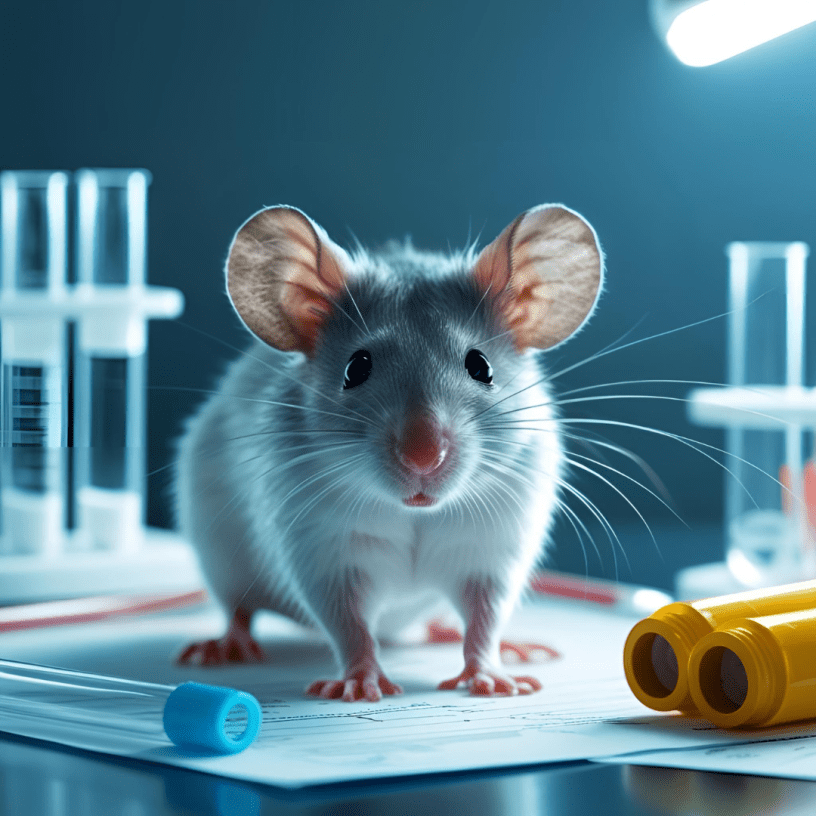
Imagine taking a gene – the instruction manual for a specific trait – from one animal and sticking it into another. Voila, you’ve got yourself a transgenic animal. It’s like a biological mashup, borrowing code from different species to create something… new. Think glow-in-the-dark mice showing scientists how diseases progress, or goats that produce spider silk in their milk. Or mice with wooly mammoth hair. This isn’t science fiction; it’s happening in labs right now, and the question I keep asking myself is whether transgenic animals are going to fully spill out into the real world (zebra puppy anyone?), whether we’re ready for it or not.
A Bestiary of Biological Borrowing: Examples Galore
The menagerie of transgenic creatures is growing daily. We’re talking about the workhorses of research, like genetically modified rodents, mostly mice, which make up over 95% of transgenic animals used in labs (think, mice created with a genetic predisposition towards Alzheimer’s or Parkinsons). These little guys are invaluable for understanding human diseases and testing potential cures. Beyond the lab, consider pigs engineered with better body temperature regulation, or even salmon modified to grow faster. And who could forget the GloFish, the first genetically modified animal to hit the pet market, sparking both fascination and fear. These examples barely scratch the surface of the biological possibilities being unlocked.

“GloFish,” or glow in the dark transgenic fish, have already been commercialized.
Focusing On Today: Uses Across Industries
The applications of transgenic animals are as diverse as the animal kingdom itself. In biomedical research, they are indispensable for modeling human diseases, from cancer to neurological disorders. By knocking out specific genes, scientists can study disease mechanisms and test new drugs. Transgenic animals also serve as biological factories, producing therapeutic proteins in their milk or eggs, offering a novel route for drug development. In agriculture, genetic modifications aim to enhance productivity, like increasing disease resistance in livestock or improving meat quality. Even the pet world is seeing the first wave of transgenic animals, bred for desired traits like color.
Focusing on Tomorrow: The Crystal Ball Gazing
The future potential of transgenic animals is mind-boggling. Imagine livestock engineered for disease resistance so robust it could revolutionize farming. Or animals modified to produce organs suitable for human transplantation, potentially solving the organ shortage crisis. There’s even talk of using genetic engineering to bring back extinct species (did not go so well in Jurassic Park!). And in a world increasingly obsessed with personalization, the ability to create pets with specific temperaments, hypoallergenic fur, or even unique aesthetic qualities seems inevitable. The only limit here seems to be our imagination – and perhaps a few pesky ethical considerations.
The Ethical Minefield: Walking a Tightrope
This power to tinker with life doesn’t come without serious ethical baggage. Concerns about animal welfare are front and center – are we causing unnecessary suffering in the pursuit of scientific or commercial gain? The potential for unintended consequences on the environment if transgenic animals escape into the wild raises alarm bells. Questions of fair access also loom large – will these technologies only be available to the wealthy elite? That is to say, will it only be tech billionaires who are able to have a farm full of ‘replacement organ pigs’ frolicking about? And fundamentally, we need to grapple with the philosophical implications of altering the very building blocks of life.
The Transgenic Pet Industry: Will Your Next Furry Friend Be Franken-Fido?
So, the million-dollar question (or billion-dollar industry?): will we see a boom in transgenic pets? On one hand, the desire for unique and personalized companions is strong. Imagine a cat that’s guaranteed to be hypoallergenic, or a dog with a perpetually playful temperament. … or the doom’s day scenario, a transgenic cat with dog DNA that drives it to fetch sticks and frisbees! The market potential is undeniably there, however niche.
Yet, hurdles remain. Ethical concerns from the public are significant (and totally valid). The idea of genetically engineering our beloved pets might sit uncomfortably with many. Regulatory frameworks are still catching up. Governments are grappling with how to oversee this rapidly evolving field (when they aren’t focused on waging trade wars). And let’s be honest, the “ick” factor – the perception of these animals as unnatural or risky – could be a major barrier to mass adoption.
My take? While we’ll likely see more transgenic pets enter the market, a full-blown, mainstream boom is probably further out than the biotech+marketing bros want you to believe. The ethical and regulatory landscapes need significant navigation, and public acceptance is far from guaranteed. We might see niche markets emerge for specific traits, but don’t expect to find genetically engineered chihuahuas at every pet store any time soon. The transgenic age is dawning, but for our furry friends, it’s likely to be a slow, and potentially controversial, sunrise.
Bibliography
Augustin, E., Vinasco‐Sandoval, T., Riquelme‐Perez, M., Plassard, D., Gaudin, M., Aurégan, G., … & Cambon, K. (2025). Hippocampal Astrocyte Morphology Follows an Unexpected Trajectory With Age in a Transgenic Rodent Model of Tauopathy. Glia. https://doi.org/10.1002/glia.70019
Choe, C. P., Choi, S. Y., Kee, Y., Kim, M. J., Kim, S. H., Lee, Y., … & Ro, H. (2021). Transgenic fluorescent zebrafish lines that have revolutionized biomedical research. Laboratory Animal Research, 37, 1-29. https://doi.org/10.1186/s42826-021-00103-2
Churchil, R. R. (2023). 5. Transgenic Chicken: Methods & Applications. In, Advanced training in poultry production with special emphasis to recent techniques in antimicrobial resistance and food safety, 37.
Domínguez-Oliva, A., Hernández-Ávalos, I., Martínez-Burnes, J., Olmos-Hernández, A., Verduzco-Mendoza, A., & Mota-Rojas, D. (2023). The importance of animal models in biomedical research: current insights and applications. Animals, 13(7), 1223. https://doi.org/10.3390/ani13071223
Gemberling, M. P., Siklenka, K., Rodriguez, E., Tonn-Eisinger, K. R., Barrera, A., Liu, F., … & Gersbach, C. A. (2021). Transgenic mice for in vivo epigenome editing with CRISPR-based systems. Nature Methods, 18(8), 965-974. https://doi.org/10.1038/s41592-021-01207-2
Knight, J. (2003). GloFish casts light on murky policing of transgenic animals. Nature, 426(6965), 372. https://doi.org/10.1038/426372b
Loi, P., Palazzese, L., Scapolo, P. A., Fulka, J., Fulka, H., & Czernik, M. (2021). 25th Anniversary of cloning by somatic-cell nuclear transfer: Scientific and technological approaches to improve SCNT efficiency in farm animals and pets. Reproduction, 162(1), F33-F43. https://doi.org/10.1530/REP-20-0653
Mukherjee, P., Roy, S., Ghosh, D., & Nandi, S. K. (2022). Role of animal models in biomedical research: a review. Laboratory Animal Research, 38(1), 18. https://doi.org/10.1186/s42826-022-00128-1
Shakweer WME, Krivoruchko AY, Dessouki SM, Khattab AA. A review of transgenic animal techniques and their applications. J Genet Eng Biotechnol. 2023 May 9;21(1):55. doi: 10.1186/s43141-023-00502-z. PMID: 37160523; PMCID: PMC10169938.
Singh, V. K., & Seed, T. M. (2021). How necessary are animal models for modern drug discovery?. Expert opinion on drug discovery, 16(12), 1391-1397. https://doi.org/10.1080/17460441.2021.1972255
Sohal, J. S., Khan, A., Vats, D., Jain, M., Polavarapu, R., Aseri, G. K., & Sharma, D. (2020). Applications of genome editing in pet world. In Genomics and biotechnological advances in veterinary, poultry, and fisheries (pp. 151-162). Academic Press. https://doi.org/10.1016/B978-0-12-816352-8.00006-0
Discover more from Prefrontal
Subscribe to get the latest posts sent to your email.
 Prefrontal