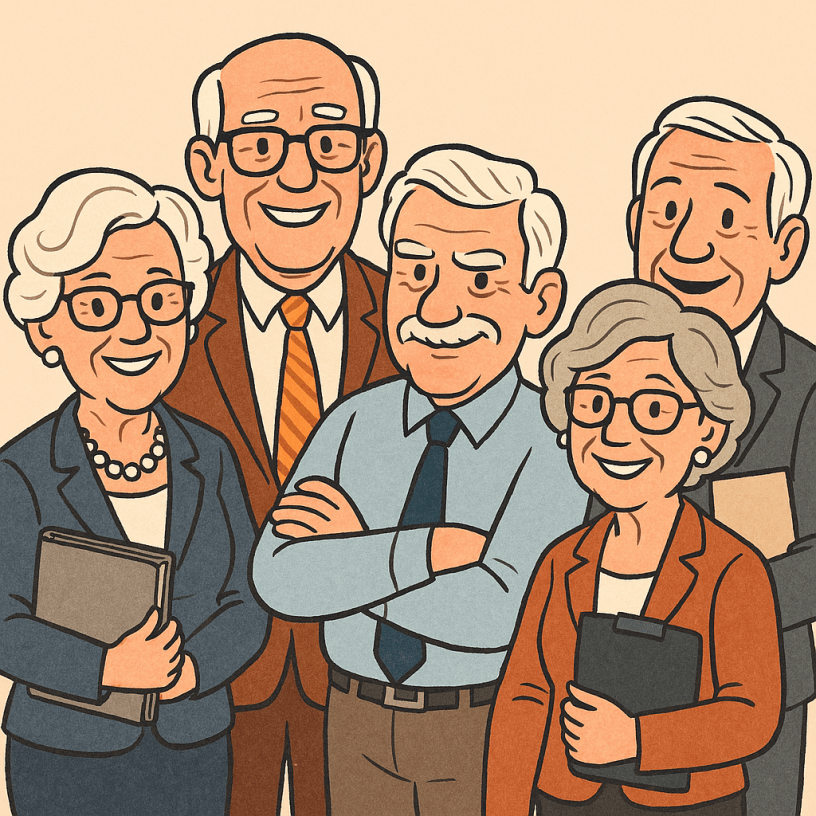
Let’s be real. We love talking about disruption, innovation, the next shiny object. But there’s a seismic shift happening in your workforce that isn’t getting the Instagram filters it deserves: your employees are getting older. Not in some distant future, but right now. And if you’re managing like it’s still 2005, you’re about to get a rude awakening.
The Graying Tide: Numbers Don’t Lie
Forget the fountain of youth; we’re staring down the barrel of an unprecedented demographic reality. There are more older adults in the labor force than ever before, and they’re sticking around longer. Globally, the over-60 population is set to nearly double between 2015 and 2050. This isn’t a niche issue; it’s the new normal. Workforce growth is slowing, even lagging behind job creation. Translation: you’ll be relying on these experienced hands whether you like it or not.
Many organizations still view older workers through a dusty lens of outdated stereotypes. They’re seen as passive recipients of their work environment, resistant to change, and less productive. This myopic view is not only ageist but also economically foolish. The truth, backed by research, is that many of these stereotypes – like older workers being less motivated or performing worse – simply aren’t confirmed. In fact, older workers often exhibit more positive job attitudes, like loyalty and commitment.
Managerial Blind Spots: Issues Lurking Beneath the Surface
So, what keeps managers from seeing this reality clearly? Often, it’s a cocktail of ingrained biases and a lack of focus on the less glamorous aspects of HR. Here’s what you need to confront:
Cognitive Changes: While crystallized intelligence (accumulated knowledge and experience) often increases with age, fluid intelligence (like processing speed and working memory) can decline. This doesn’t mean older employees are less capable, but it does mean they might approach tasks differently or benefit from adjustments in workload or task design. Jobs low in complexity can actually be disadvantageous as they don’t allow for leveraging accumulated knowledge.
Health and Well-being: The likelihood of health issues increases with age. Chronic conditions can impact work ability. Ignoring this and not providing support can lead to decreased productivity and increased absenteeism.
Age Stereotypes and Discrimination: These insidious beliefs can affect everything from hiring and promotion decisions to training opportunities and day-to-day interactions. Managers harboring unconscious biases might inadvertently limit the potential of their older employees.
Person-Job Fit Mismatch: As employees age, their skills, motivations, and physical abilities evolve. A job that was once a perfect fit might become a source of strain or disengagement over time. This requires a proactive approach to ensure a continued alignment between the person and the job.
HR Practices: Many traditional HR practices are designed with younger and middle-aged workers in mind. Failing to adapt these to the needs of an aging workforce is a strategic oversight.
The Playbook: Recommendations for Managers
Smart managers understand that a multi-generational workforce is a strength, not a liability. Here’s how to navigate this evolving landscape:
Embrace Your Aging Workforce: This isn’t just about ticking boxes; it’s about fundamentally rethinking your people strategy. Conduct age-inclusive job analyses and eliminate discriminatory selection procedures. Ensure equal opportunities for training and development, recognizing that older workers may benefit from tailored approaches.
Redesign Work for Longevity: Consider the various abilities and needs of your aging workforce when designing jobs. This might involve offering flexible work arrangements, adjusting physical demands, or providing assistive technologies. Job resources like autonomy and control can directly support work ability. Even seemingly challenging job demands, when coupled with autonomy, can stimulate proactive behaviors like job crafting.
Invest in Lifelong Learning and Development: Older workers aren’t relics; they’re reservoirs of experience who can also learn new tricks. Offer opportunities for skill development and knowledge updating. Recognize that they may compensate for declines in some areas by focusing on tasks leveraging their deep expertise.
Implement Fair and Objective Performance Management: Ensure your performance appraisal systems are free from age-related bias and stereotypes. Provide clear and consistent feedback, focusing on objective metrics. Understand that successful aging at work involves maintaining ability and motivation.
Recognize and Leverage Experience: Older workers possess invaluable institutional knowledge and expertise. Create opportunities for them to mentor younger colleagues or take on roles that leverage their accumulated wisdom. Their intrinsic motivation often stems from the meaning of their work and their level of decision authority.
Support Health and Well-being: Be mindful of the physical and mental health of your aging employees. Consider offering resources and programs that promote a “work-health balance”. Accommodative practices like reduced workload or job redesign can be particularly beneficial.
The Savvy Veteran’s Strategy: Recommendations for Older Employees
This isn’t just on the managers; older employees themselves have a crucial role to play in navigating their careers successfully:
Embrace Proactive Adaptation (Job Crafting): Don’t be a passive recipient of your work environment. Actively shape your job to better align with your evolving skills and motivations. This might involve taking on new challenges, delegating tasks that are no longer a good fit, or focusing on aspects of your role that you find engaging.
Commit to Lifelong Learning: The world of work is constantly changing. Stay relevant by continuously updating your skills and knowledge. Seek out training opportunities and be open to learning new technologies.
Focus on Your Strengths and Experience: You bring a wealth of knowledge and expertise to the table. Identify your core strengths and seek roles or tasks that allow you to leverage them effectively. Your crystallized intelligence is a valuable asset.
Manage Your Health and Well-being: Prioritize your physical and mental health. Adopt a healthy lifestyle and take advantage of any wellness programs offered by your employer. Being proactive about your health is crucial for sustained work ability.
Seek and Offer Support: Build strong professional networks and don’t hesitate to seek advice or assistance when needed. Also, consider mentoring younger colleagues; your experience is a valuable resource.
Be Open to Change and New Opportunities: While job mobility might be lower for older workers, be open to evolving your role or even considering new career paths if it aligns with your goals and abilities. Proactive career planning is essential.
The Bottom Line: It’s About Longevity
Ignoring the aging of your workforce isn’t a viable long-term strategy. Successful aging at work – for both employees and organizations – requires a shift in mindset and proactive, age-inclusive practices. It’s about creating a sustainable work environment where experienced employees can continue to contribute meaningfully, maintaining their health, motivation, and work ability.
The demographic tide is rising. Smart managers will not only adapt but will also recognize the immense potential and stability that an experienced workforce brings. It’s not about resisting the gray; it’s about leveraging the gold.
Bibliography
Barakovic Husic, J., Melero, F. J., Barakovic, S., Lameski, P., Zdravevski, E., Maresova, P., … & Trajkovik, V. (2020). Aging at work: A review of recent trends and future directions. International journal of environmental research and public health, 17(20), 7659. https://www.mdpi.com/1660-4601/17/20/7659#
Converso, D., Sottimano, I., Guidetti, G., Loera, B., Cortini, M., & Viotti, S. (2018). Aging and work ability: the moderating role of job and personal resources. Frontiers in Psychology, 8, 2262. https://doi.org/10.3389/fpsyg.2017.02262
Fisher, G. G., Chaffee, D. S., Tetrick, L. E., Davalos, D. B., & Potter, G. G. (2017). Cognitive functioning, aging, and work: A review and recommendations for research and practice. Journal of occupational health psychology, 22(3), 314.https://psycnet.apa.org/doi/10.1037/ocp0000086
Hedge, J. W., & Borman, W. C. (Eds.). (2012). The Oxford handbook of work and aging. Oxford University Press
Hertel, G., & Zacher, H. (2018). Managing the aging workforce. The SAGE handbook of industrial, work, & organizational psychology, 3, 396-428.
Kooij, D. T. (2015). Successful aging at work: The active role of employees. Work, Aging and Retirement, 1(4), 309-319.https://doi.org/10.1093/workar/wav018
Kooij, D. T., Zacher, H., Wang, M., & Heckhausen, J. (2020). Successful aging at work: A process model to guide future research and practice. Industrial and Organizational Psychology, 13(3), 345-365. https://doi.org/10.1017/iop.2020.1
Shultz, K. S., & Adams, G. A. (Eds.). (2007). Aging and work in the 21st century (pp. 303-19). Mahwah, NJ: Lawrence Erlbaum Associates.
Discover more from Prefrontal
Subscribe to get the latest posts sent to your email.
 Prefrontal